The right iGaming partnership delivers more than revenue. It accelerates growth, builds momentum, and strengthens your reputation in markets where word travels fast.
The difference between partnerships that compound and those that wither usually comes down to ten elements that have nothing to do with who offers the best revenue split. Here’s what actually matters when you’re building alliances that deliver.
TL;DR
- Strategic Alignment Matters Most: Partners who agree on goals before revenue splits build relationships that actually last.
- Transparency Prevents Disasters: Open communication about performance and challenges catches problems before they become expensive.
- Real Data Sharing Beats Reports: Actionable insights into player behavior help both sides optimize together, not point fingers.
- Traffic Diversification Protects You: Spreading acquisition across affiliates, ad networks, and direct deals reduces dependency on any single channel.
- Long-Term Thinking Wins: Partnerships focused on player lifetime value consistently outperform short-term volume chasing.
Start With the Right Partner, Not Just Any Partner
Successful iGaming partnerships come down to shared goals, transparent communication, and data-driven personalization that maximizes player lifetime value. The tech stack and traffic volume matter, sure. But they’re secondary to whether both parties actually agree on what winning looks like.
Think of partner vetting the way you’d approach hiring a co-founder. Do they understand iGaming regulations in your target markets? Have they delivered real results for brands like yours? A partner who crushes it in casino verticals might struggle with sportsbook campaigns. The reverse is also true.
What you’re looking for is complementary strengths, not overlapping ones. If your team excels at creative but lacks media buying expertise, a partner with sophisticated targeting and optimization fills that gap nicely.
Here’s what to look for when vetting:
- Vertical Expertise: Do they know the regulatory quirks of your specific iGaming category?
- Proven Track Record: Can they show concrete performance data from similar campaigns?
- Complementary Capabilities: Do they fill gaps in your team rather than duplicate what you already do well?

Align on Shared Goals Before Revenue Splits
Misaligned KPIs are the silent killer of iGaming partnerships. One party optimizing for volume while the other optimizes for player quality creates friction that compounds over time. And nobody wants to have that awkward “we need to talk” conversation six months in.
Get specific about what success looks like before you negotiate commercial terms. Are you focused on first-time depositors? Player lifetime value? Brand awareness in a new market? Each of those requires different traffic sources, different measurement frameworks, and different optimization approaches.
The partnerships that work establish shared dashboards and regular performance reviews from day one. When both parties look at the same numbers, there’s less room for finger-pointing when results don’t meet expectations. Agreeing on revenue splits before agreeing on goals is like splitting the bill before anyone’s ordered dinner.
Proactive Communication Prevents Costly Mistakes
Waiting until something breaks to have a conversation is a recipe for expensive surprises. The strongest iGaming partnerships build communication rhythms that catch issues early and surface opportunities quickly.
Weekly or biweekly syncs don’t have to be marathon calls. Fifteen minutes to review performance, flag concerns, and align on priorities often does the job. What matters is consistency and candor.
A few communication habits that actually work:
- Regular Syncs: Short, frequent check-ins beat monthly three-hour calls every time
- Shared Channels: Dedicated Slack channels or project management tools keep conversations organized and searchable
- Escalation Protocols: Define how to handle urgent issues before they happen, not during the crisis
Make Transparency Non-Negotiable
Partners who hide problems create bigger problems. If traffic quality is declining, conversion rates are dropping, or regulatory changes are affecting performance, both parties benefit from knowing immediately.
Transparency isn’t just about sharing good news. It’s about creating an environment where bad news travels fast. The partnerships that survive market shifts are the ones where both sides feel comfortable raising concerns without fear of damaging the relationship.
Financial transparency matters too. Clear reporting on costs, margins, and revenue attribution eliminates the suspicion that erodes trust over time. A partnership without transparency is like a phone with no signal: technically connected, but not actually communicating.
Share Data, Not Just Dashboards
A monthly PDF report with top-line metrics is not data sharing. Real partnership means giving each other access to actionable insights: player behavior patterns, conversion funnel breakdowns, and segment-level performance data.
When both parties can see which traffic sources produce high-LTV players versus one-time depositors through segment-level performance analysis, optimization becomes collaborative and strategic. You’re working together to unlock insights and drive better results for both sides.
| Surface-Level Sharing | True Data Partnership |
|---|---|
| Monthly PDF reports | Real-time shared dashboards |
| Top-line metrics only | Segment-level breakdowns |
| Reactive analysis | Collaborative optimization |
Diversify Traffic Sources to Reduce Risk
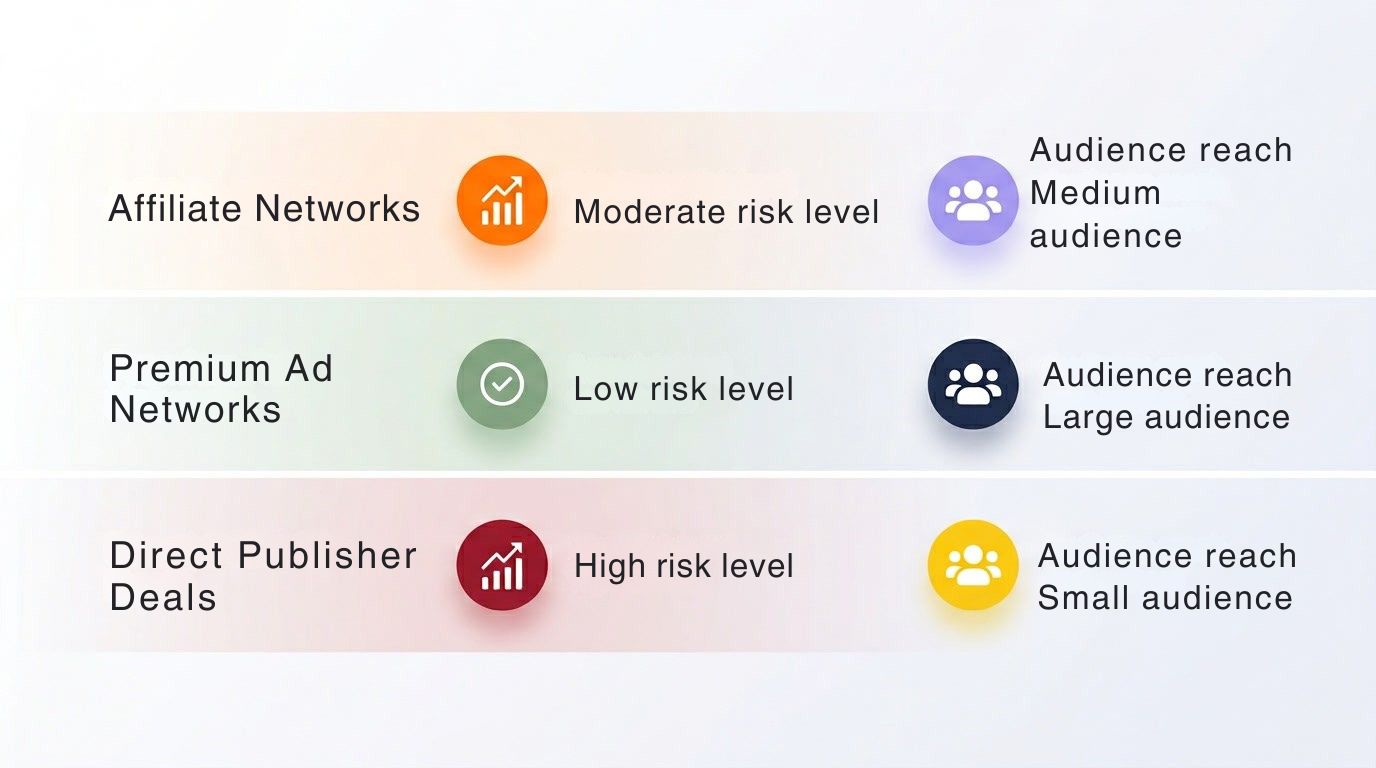
Relying on a single traffic source in iGaming is like betting your entire bankroll on one hand. Markets shift, regulations change, and platforms adjust their algorithms without warning. Smart iGaming marketing spreads acquisition across multiple channels, each with different risk profiles and audience characteristics.
Affiliate Networks
Affiliate programs remain a cornerstone of iGaming acquisition. RevShare models align incentives around player quality, while CPA deals provide predictable costs for scaling. The key is finding affiliates who understand your target markets and can deliver players who actually deposit and play, not just click and bounce.
Premium Ad Networks
High-quality inventory from networks with direct publisher relationships typically outperforms aggregated traffic. Networks that own their inventory, rather than buying and reselling, offer better traffic quality, more transparent reporting, and often lower costs per acquisition. TrafficJunky, for example, provides direct access to premium inventory with granular targeting options specifically built for iGaming advertisers.
Direct Publisher Deals
Negotiating directly with publishers requires more effort but often yields the best ROI. Custom placements, exclusive inventory, and tailored pricing become possible when you’re not competing through an intermediary’s auction.
Use Automation to Scale Without Adding Headcount
Manual campaign management doesn’t scale. As your iGaming partnerships grow, automation tools become essential for maintaining performance without proportionally growing your team.
Creative rotation that automatically tests and prioritizes top-performing ads eliminates the guesswork from optimization. CPA-focused bidding tools let algorithms adjust bids based on actual conversion data rather than gut instinct. Tools like TrafficJunky’s Autopilot and Bidder handle creative rotation and CPA optimization automatically, freeing your team to focus on strategy rather than manual adjustments.
Automation use cases that deliver results:
- Creative Rotation: Automatically test and prioritize top-performing ads without manual intervention
- Bid Optimization: Set CPA targets and let algorithms adjust bids in real-time based on conversion data
- Traffic Rules: Automatically exclude underperforming segments before they drain your budget
Stay Compliant Across Every Market You Enter
With over $160 million in penalties issued worldwide in just the first half of 2025, nothing ends a partnership faster than a regulatory fine with both names on it. iGaming compliance varies dramatically by jurisdiction, and the rules change frequently.
Partners who share responsibility for compliance, rather than pointing fingers when something goes wrong, build more durable relationships. Staying current on licensing requirements, advertising restrictions, and responsible gambling obligations in every market you target is part of the job.
The best partnerships include compliance checkpoints in their regular communication rhythms. A quick review of regulatory developments in key markets prevents costly surprises down the road. Working with ad networks that understand restricted verticals, like TrafficJunky’s compliance team, can help navigate regional differences in ad rules more efficiently.
Expand Into Emerging Markets With Local Insight
Geographic expansion is where partnerships often deliver their greatest value. A partner with established relationships and local knowledge in a new market dramatically reduces your learning curve.
Whether you’re entering Latin America — a market projected to hit $10–$12 billion by 2028 — expanding across the EU, or testing new Asian markets, local expertise on payment preferences, cultural nuances, and regulatory requirements accelerates time to profitability. Partners who’ve already navigated the licensing process, built relationships with local payment providers, and understand regional player behavior can compress months of trial and error into weeks.
Build for Long-Term Value, Not Quick Wins
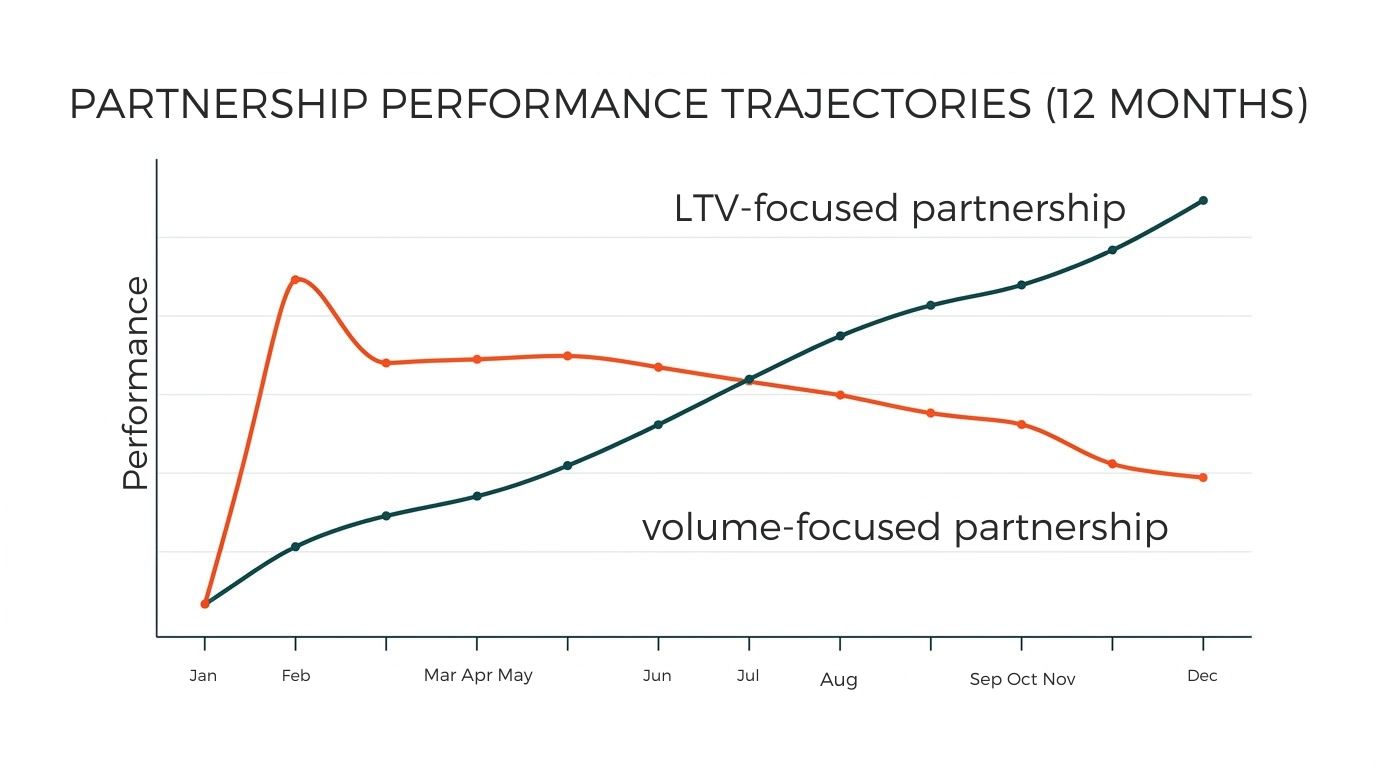
The iGaming partnerships that compound over time are the ones built around player lifetime value rather than short-term volume — Optimove research found that LTV-focused operators achieve 33% higher lifetime value while reducing churn by up to 40%.
With acquisition costs ranging from $280 to $1,400 per depositor, chasing first-time depositor numbers at the expense of player quality creates a treadmill that’s exhausting and expensive.
Partnerships that evolve, testing new markets together, adapting to regulatory changes, and continuously optimizing based on shared data, outperform partnerships that remain static. The willingness to invest in the relationship, even when short-term results are mixed, separates partnerships that last from partnerships that fizzle after a few quarters.
Partnerships That Perform Start With Better Traffic
Every element covered here, from alignment and transparency to data sharing and diversification, becomes easier when you’re working with high-quality traffic from the start.
TrafficJunky gives iGaming advertisers access to premium inventory with granular targeting, advanced automation tools, and dedicated support from a team that understands the regulatory nuances of restricted verticals. With billions of daily impressions and audience demographics that overlap significantly with iGaming players, it’s a foundation built for partnerships that perform.
Sign up today to access high-volume iGaming traffic with a partner built for performance.
FAQs About iGaming Partnerships
How do you measure the ROI of an iGaming partnership?
Track player lifetime value, cost per acquisition, and revenue attributed to the partnership over time. Compare those metrics against your standalone efforts and other partnerships to quantify the specific contribution. Short-term metrics like first-time depositors matter, but LTV tells the real story.
What are common red flags when evaluating potential iGaming partners?
Watch for lack of transparency about traffic sources, unwillingness to share granular performance data, and vague claims about results. Partners who avoid specifics about their methodology or resist regular performance reviews often have something to hide.
How often should iGaming partnership terms be renegotiated?
Review terms quarterly or when market conditions shift significantly. Regulatory changes, new market entries, or substantial performance improvements all warrant revisiting the commercial arrangement. Regular reassessment keeps the partnership aligned with both parties’ evolving goals.